
A bride once arrived at our studio barely two hours before her nikah, foundation brush in hand, asking why her skin looked patchy no matter how much product we layered on. The answer was sitting in her makeup bag: a foundation brush she admitted she had not washed since her last event, months earlier. We rinsed it, reshaped it, and within fifteen minutes her base went on like silk. That single moment captures what we have learned after years of running a busy ladies salon in Business Bay, Dubai — clean brushes are not a luxury step you do “when you have time.” They are the difference between makeup that sits and makeup that glows.
The problem is that “cleaning your brushes” sounds like a weekend chore nobody has time for. It isn’t, once you understand that there are two speeds of clean — and most days you only need the fast one. Here is exactly how our team keeps brushes hygienic and event-ready in minutes, not hours.
Why Dirty Brushes Quietly Sabotage Your Face
Every time you sweep an unwashed brush across your skin, you are not simply applying fresh product. You are re-depositing old makeup, facial oil, dead skin cells and whatever bacteria has been multiplying in the bristles since the last use. Dermatology experts, including the American Academy of Dermatology, connect that buildup to clogged pores, breakouts and, in some cases, irritation or dermatitis. Eye brushes carry a separate risk, because the delicate eye area is far more prone to infection than the rest of the face.
There is a performance cost too. A brush loaded with dried foundation cannot pick up and release colour evenly, so blush turns muddy, eyeshadow refuses to blend, and you reach for more product to compensate. In our chair, roughly half of the “my makeup won’t sit” complaints are solved not by a new foundation, but by a genuinely clean brush.
The Real Secret to Speed: Spot Clean vs Deep Clean
Professionals rarely deep-wash brushes in the middle of a working day. Instead we clean in two modes, and knowing which one you actually need is what makes the whole task quick.
Spot cleaning is a fast, almost instant refresh between uses — it lifts surface product and disinfects with little to no drying time. Deep cleaning is the thorough weekly wash that removes everything right down to the base of the bristles. Think of spot cleaning as brushing your teeth and deep cleaning as a dental visit: do the quick one often, and the big one stays rare and painless. Get this rhythm right and you will almost never face a counter full of caked brushes again.
The 3-Minute Spot Clean (Your Everyday Method)
This is the technique makeup artists use on set to switch shades in seconds, and it is perfect for busy mornings.
- Lightly mist the bristles with a quick-dry brush cleaner, or dip only the very tips into a shallow pool of it. A 70% isopropyl alcohol spray also disinfects well, though we reserve it for synthetic brushes.
- Swipe the brush back and forth on a clean paper towel, following the direction the bristles naturally lie. For round blending brushes, swirl in gentle circles instead.
- Repeat until the towel stays clean, reshape the head, and set it down. Because these cleaners evaporate quickly, the brush is usable again within a minute or two.
Keep your cleaner and a roll of paper towel right beside your makeup, not tucked away in a cupboard — the single biggest reason people skip this step is that the supplies are out of reach. For anyone who wears full glam often, or works professionally the way our makeup artists do, a daily spot clean stops product from settling deep into the fibres, which is precisely what makes the weekly wash so much faster.
The Fast Deep Clean, Done Right
Once a week — or every few weeks for lighter users — give your brushes a proper wash. Done efficiently, a full set takes under ten minutes.
- Rinse only the bristle tips under lukewarm running water. Never hot, because heat damages the fibres, and never submerge the metal ferrule, because water loosens the glue holding the head to the handle. This is the number-one cause of shedding brushes.
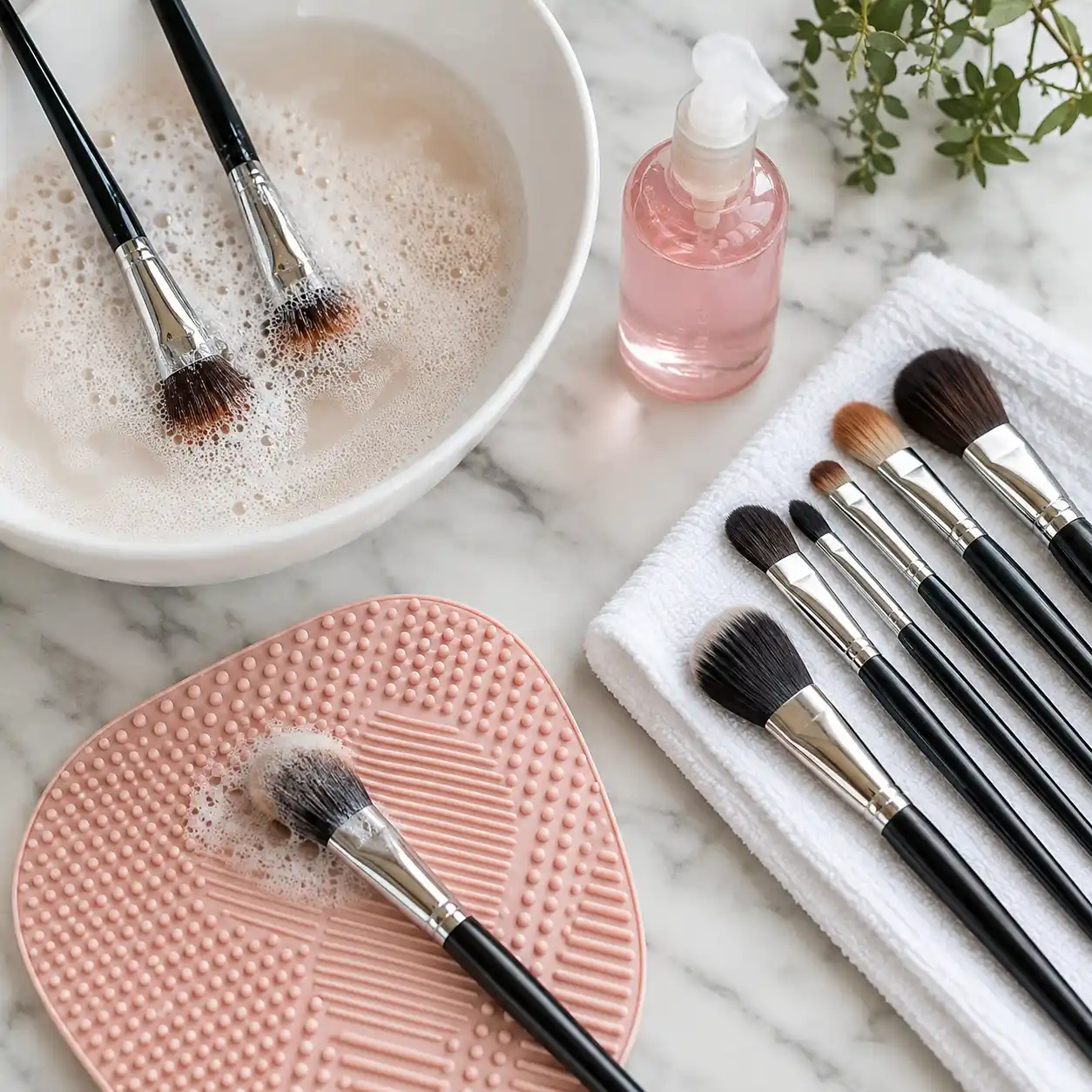
- Massage a pea-sized amount of gentle cleanser into the tips, either in your palm or on a textured silicone mat. Baby shampoo or a mild clarifying shampoo suits most brushes; a dedicated brush soap works beautifully too.
- Rinse, lather and repeat until the water runs completely clear. Cloudy water means product is still hiding deep in the bristles.
- Squeeze out excess water with a clean towel, then reshape each head with your fingers before it dries.
Match your cleanser to your bristles. Natural-hair brushes prefer a gentle, shampoo-style wash that preserves their oils, while synthetic fibres tolerate a slightly stronger cleanser or the occasional alcohol spritz. For stubborn synthetic pigments that cling — deep reds and purples especially — a little raw coconut oil worked through the tips before washing helps pull the colour out. Eye brushes deserve extra care, since they touch the most infection-prone part of your face; if you regularly wear liner and shadow, or top up your lashes with eyelash and eyebrow treatments, wash those smaller brushes at least every two weeks.
Dry Them Fast Without Ruining Them
Drying is where good brushes quietly die, so it is worth thirty seconds of attention. Lay brushes flat on a towel with the tips hanging just off the edge of the counter, or angled slightly downward. This lets air circulate and keeps water away from the ferrule.
Never dry brushes standing upright in a cup while still wet. Gravity pulls the moisture straight down into the glue, and over weeks that is exactly what turns a lovely brush into a shedding one. If you need to speed things up, a small fan or an open, breezy window does far more good than a hairdryer, which can scorch delicate fibres. Most brushes are touch-dry within a couple of hours and fully ready by morning, which is why we wash ours in the evening as part of the wind-down.
How Often Should You Really Clean Them?
A simple schedule keeps you honest: wash foundation and concealer brushes and makeup sponges roughly once a week, eye brushes every two weeks, and dry powder or blush brushes every two to four weeks. Spot clean anything you use daily. Set a recurring phone reminder — a Sunday-evening brush wash is a habit worth building, the same way a consistent beauty and skincare routine keeps the rest of your look sharp all week.
When Cleaning Is No Longer Enough
Even flawless care has a limit. Well-kept natural brushes can last many years and quality synthetics a few seasons, but when a brush keeps shedding after washing, stays misshapen, feels scratchy against the skin, or holds a smell no wash removes, it has reached the end of its life. Replacing it is far kinder to your skin than nursing it along.
The Takeaway
Clean brushes are the cheapest upgrade in your makeup bag. Spot clean in the moment, deep clean on a steady rhythm, dry them flat, and match the cleanser to the bristle — that is the entire system our artists rely on every single day. Your skin stays clearer, your makeup sits better, and your favourite brushes last for years instead of months. If you would rather leave it to the professionals, our team is always happy to help you look and feel your best.
Frequently Asked Questions
How can I clean my makeup brushes quickly without a special cleaner?
You do not need a dedicated product. A drop of gentle baby shampoo or mild clarifying shampoo massaged into the wet bristle tips, then rinsed until the water runs clear, cleans most brushes well. For an even faster refresh between full washes, wipe the brush on a paper towel dampened with a little cleanser or 70% alcohol.
Can I use rubbing alcohol on makeup brushes?
Yes, 70% isopropyl alcohol is a quick way to disinfect and spot clean, and it dries fast. It suits synthetic brushes best. Used repeatedly on natural-hair brushes it can strip the oils that keep the fibres soft and flexible, so use it sparingly on those.
How do I dry makeup brushes fast without damaging them?
Squeeze out the water, reshape the head, then lay the brushes flat with the tips hanging slightly off the edge of the counter so air moves around them. A fan speeds this up safely. Avoid drying them upright while wet and skip the hairdryer, as heat can damage the bristles and the glue.
How often should I clean my makeup brushes?
As a rule of thumb, wash brushes used with liquids and creams (and makeup sponges) about once a week, eye brushes every two weeks, and dry powder brushes every two to four weeks. Spot clean daily-use brushes in between to keep them fresh.
Why do my brushes shed after I wash them?
The most common cause is water reaching the metal ferrule, which loosens the glue that holds the bristles in place. Rinse only the tips, keep the base dry, and dry the brush flat rather than upright. Persistent shedding after careful washing usually means the brush is simply worn out.
Is it okay to wash makeup brushes with normal soap?
Plain bar soap can dry out and stiffen the bristles over time. A gentle shampoo, a mild liquid soap, or a purpose-made brush cleanser is kinder to the fibres and keeps them soft, while still cutting through oil and product.